Guides
GLP-3: triple agonist for in-vitro research
GLP-3 is a synthetic peptide that addresses the GIP, GLP-1 and glucagon receptors. This guide covers its structure, receptor profile, laboratory testing and storage for in-vitro research.
Research Use Only- Published2026-09-20
- Updated2026-09-23
- AuthorGPeptides editorial team (operator)
What GLP-3 is
GLP-3 is a synthetic peptide that acts as a receptor agonist. It binds to three receptors – the GIP receptor, the GLP-1 receptor and the glucagon receptor – and is therefore classed in the literature as a single-molecule triple agonist (‘triagonist’). The CAS registry number is 2381089-83-2, the molecular formula is C221H342N46O68 and the molar mass is approximately 4731 g/mol.
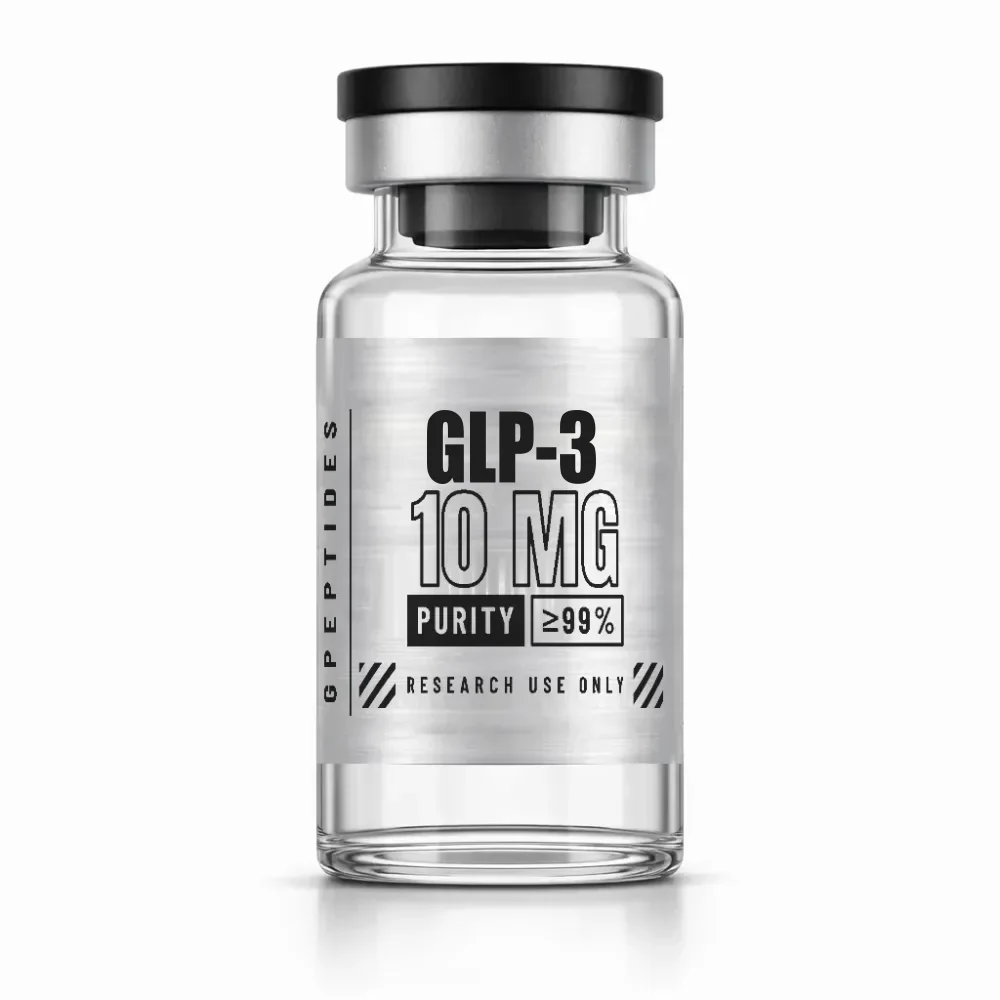
GPeptides offers GLP-3 as a lyophilised peptide in a 10 mg vial for in-vitro research.
Structure and receptor profile
The peptide backbone of GLP-3 is derived from GIP and carries several amino-acid substitutions. The chain is acylated with a C20 fatty diacid moiety (lipidation). Three incretin analogues can be distinguished by the receptors they address:
- Semaglutide – GLP-1 receptor agonist (mono-agonist).
- Tirzepatide – GIP/GLP-1 receptor dual agonist.
- GLP-3 – GIP/GLP-1/glucagon receptor triple agonist.
The list describes receptor profiles only, not effects, and implies neither a ranking nor a progression from one molecule to the next. Related molecules are grouped on the incretin analogues category page.
Why it is called ‘GLP-3’
‘GLP-3’ is the shop’s own catalogue name; it is neither an INN nor a scientific classification. It does not denote a hormone or a receptor class of its own – the ‘3’ is shorthand for the three receptors the molecule addresses. What identifies the material unambiguously is the CAS registry number given above together with a published certificate of analysis, where available.
Quality: how the reagent is tested
GLP-3 is tested regularly by an external laboratory using two methods:
- HPLC (high-performance liquid chromatography) determines purity, i.e. the proportion of the target peptide among the peaks detected in the chromatogram (chromatographic purity, not net peptide content).
- Mass spectrometry confirms identity by comparing the measured molecular mass with the value of approximately 4731 Da expected from the molecular formula.
Certificates of analysis (COAs) are published in the lab certificates area as soon as the laboratory releases them; each COA names the material it refers to, the method and the test date, so a report can be compared with the label on the vial. Reading such a report is explained in the guide to reading a COA, purity values in the guide to peptide purity, and the methods themselves in the HPLC and MS basics guide.
Storage and handling in the laboratory
GPeptides supplies GLP-3 as a lyophilised powder in a sealed 10 mg vial. Lyophilised peptides are stored cool, dry and protected from light; for longer periods they are kept frozen. Vials are kept sealed until analysis, and the original label stays with the vial so that the COA remains easy to match. Storage conditions are described in more detail in the guide to storing lyophilised peptides.
Research use only – legal notice
The GLP-3 offered by GPeptides is not a medicine and is not intended for any medicinal, diagnostic, cosmetic or nutritional use in humans or animals. It is a research-grade peptide supplied exclusively for in-vitro research. GPeptides provides no information on administration in humans or animals and makes no statements about effects. Orders are shipped from Germany within the EU. The product is listed on its product page GLP-3 and alongside related molecules on the incretin analogues category page.
Related categories: Incretin Analogues
Related products
Related guides
How to read a certificate of analysis (COA)
Test method, purity in percent, test date, laboratory: a COA is only as good as the information it contains. How to check whether a certificate matches the vial in your hand.
Read more: How to read a certificate of analysis (COA) →Purity of research peptides: what the percentages mean
Purity is not the same as content. Anyone comparing COAs should be able to distinguish area percent, net peptide content and typical by-products of peptide synthesis.
Read more: Purity of research peptides: what the percentages mean →Storing lyophilised peptides: temperature, light, humidity
Dry, cold, dark: lyophilisates are robust but not indestructible. The key rules for unopened vials, opened vials and solutions.
Read more: Storing lyophilised peptides: temperature, light, humidity →