- Home
- Shop
- Melanocortins & Copper Peptides
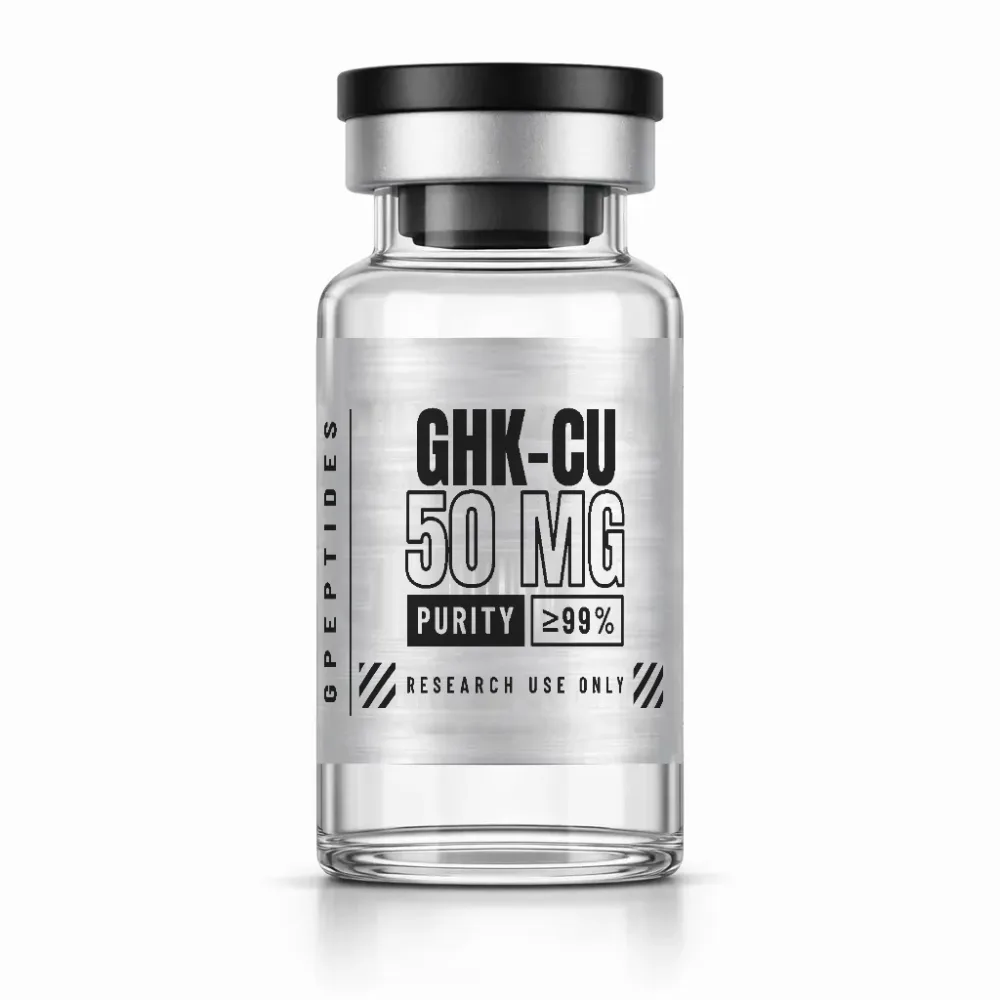
- GHK-Cu 50 mg
Copper peptide≥98% Purity
GHK-Cu 50 mg
GHK-Cu is a naturally occurring copper-binding tripeptide extensively studied in research on skin and regeneration pathways.
FormLyophilized powder
AnalyticsHPLC / MS
COA09.09.2026
€27.90
incl. VAT, plus shipping
50 mg
Product information
GHK-Cu is supplied as a lyophilised powder in a sealed vial. The product is intended exclusively for laboratory and research purposes and not for use in humans or animals.
The available test documents are kept in the lab section, so product and test report stay linked and traceable.
Quick profile
- Copper tripeptide (GHK-Cu)
- Research on collagen signalling
- High content: 50 mg per vial
Guide · GHK-Cu: structure, analytics and handling in research →
About GHK-Cu
What is GHK-Cu?
GHK-Cu is the complex formed by the tripeptide glycyl-L-histidyl-L-lysine (GHK) and a copper(II) ion. Other names in use are Copper Tripeptide-1, prezatide copper and Cu(II)-GHK. The tripeptide occurs naturally in human blood plasma: it was isolated there as a constituent and forms a chelate complex with copper(II) ions. The product in the catalogue, by contrast, is produced synthetically.
Chemical structure and key data
The peptide itself is short: glycine, histidine and lysine, linked to form H-Gly-L-His-L-Lys-OH with a free amino and carboxy terminus. This tripeptide binds the copper(II) ion as a chelate complex. Unlike hormone analogues, GHK-Cu is not assigned to any single classical receptor. Which key data apply depends on which form is being considered:
- Free peptide GHK: C14H24N6O4, 340.38 g/mol, CAS 49557-75-7, PubChem CID 73587
- Neutral 1:1 copper complex: C14H22CuN6O4, around 401.9 g/mol
- Copper complex (prezatide copper): CAS 89030-95-5, PubChem CID 71587328
Product information frequently confuses the CAS numbers of free GHK and the copper complex; 49557-75-7 belongs to the copper-free tripeptide, 89030-95-5 to the copper complex. There are also entries for a 2:1 bis complex and for an acetate with a considerably higher molar mass. The exact figure therefore depends on stoichiometry and counter-ion.
GHK-Cu in the range
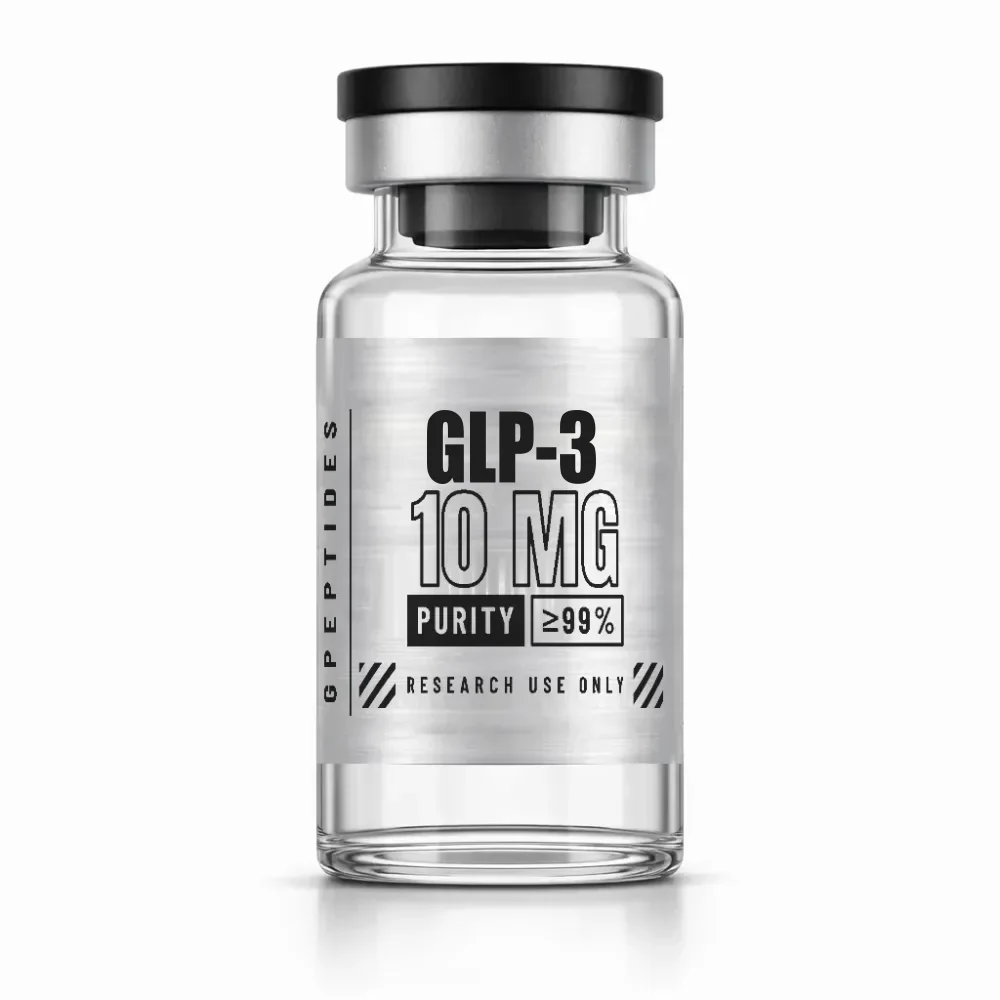
In the Melanocortins & Copper Peptides category, GHK-Cu sits alongside the α-MSH analogues MT1 and MT2. It shares their place in the catalogue, but not their molecular class: the melanocortins are receptor ligands, whereas GHK-Cu is a peptide–metal complex. GHK-Cu is also part of the GLP-3 + GHK-Cu set, which comprises two vials and combines it with the incretin analogue GLP-3.
Research context
GHK-Cu is studied mainly in in-vitro models with fibroblasts and other cell cultures, and in preclinical work on the chemistry of copper peptides. The focus is on the binding and provision of copper, the synthesis of extracellular matrix components – collagen, elastin and glycosaminoglycans – and gene expression patterns associated with GHK.
Analytics at GPeptides
The vial contains 50 mg; the listed purity is ≥ 98 % (HPLC). For identity testing by mass spectrometry, the mass of the tripeptide GHK is the central reference point: C14H24N6O4, around 340.19 Da monoisotopic. Whether copper-containing signals also appear depends on ionisation and measurement conditions. Copper has two stable isotopes, which is why such signals show a characteristic isotope pattern. Testing is carried out by an independent external laboratory: GHK-Cu is regularly tested externally by HPLC and mass spectrometry. We publish the available certificates of analysis (COA) in the lab area; if none has been filed there yet, testing is considered pending. What a percentage purity figure covers, and what it does not, is explained in the guide Purity of research peptides.
Specifications
The relevant product data is part of the page content: form, purity, test method and intended use.
| Form | Lyophilized powder |
|---|---|
| Database | PubChem |
| Purity | ≥98% |
| Test methods | HPLC / MS |
| Unit | 50 mg |
| Category | Melanocortins & Copper Peptides |
| SKU | GP-0013 |
Use
Research Use Only. All products are intended exclusively for scientific in-vitro research and not for human or animal use.
| Use | Research only (in-vitro) |
|---|---|
| Storage | Dry & cool · −20 °C long-term |
Lab certificates
Quality assurance
Externally tested, traceably documented.
Identity and purity are regularly tested externally by HPLC and mass spectrometry. The available certificates of analysis are filed in the lab section.
View all lab certificates →Current report
Certificate of Analysis (COA)
| Tested on | 09.09.2026 |
|---|---|
| Purity | 99 |
| Test methods | HPLC / LC-MS |
| Test date | 09/26 |
Frequently asked questions
Which CAS number belongs to GHK-Cu?
The copper complex (prezatide copper) is registered under CAS 89030-95-5. The frequently quoted number 49557-75-7, by contrast, denotes the free tripeptide GHK without copper.
What is the difference between GHK and GHK-Cu?
GHK is the free tripeptide glycyl-L-histidyl-L-lysine with the molecular formula C14H24N6O4 and 340.38 g/mol. GHK-Cu is the complex of this tripeptide with a copper(II) ion.
Why are different molar masses given for GHK-Cu?
Databases list several forms: a neutral 1:1 complex (around 401.9 g/mol), a cationic representation (402.92 g/mol), a 2:1 bis complex and an acetate. The value therefore depends on which stoichiometry and which counter-ion are assumed.
Is GHK-Cu also available in a set?
Yes. Besides the single 50 mg vial, GHK-Cu is part of the GLP-3 + GHK-Cu set, which comprises two vials.
What is this product for?
Exclusively for scientific in-vitro research and laboratory use. Not for human or animal use, not for diagnostic or therapeutic purposes.
How is the peptide supplied?
As a lyophilized (freeze-dried) powder in a sealed vial. For reconstitution in a research context, bacteriostatic water is typically used.
How do I store it?
Unopened and lyophilized: cool, dry and protected from light; for long-term storage at −20 °C. Reconstituted: refrigerated and used promptly.
Is there a Certificate of Analysis (COA)?
Published certificates of analysis are listed by product in the Lab section. If no report is available for a product yet, it is marked as “pending” there.
Related products
Related guides
GHK-Cu: structure, analytics and handling in research
In GHK-Cu, the unmodified tripeptide Gly-His-Lys binds a copper(II) ion. This guide explains the naming, the copper binding, the distinction from related molecules, the expected masses in the certificate of analysis, and the storage and handling of the reagent.
Read more: GHK-Cu: structure, analytics and handling in research →Storing lyophilised peptides: temperature, light, humidity
Dry, cold, dark: lyophilisates are robust but not indestructible. The key rules for unopened vials, opened vials and solutions.
Read more: Storing lyophilised peptides: temperature, light, humidity →Shipping research peptides: packaging, transit times, receipt of goods
From Germany to the laboratory: how vials are packed, which transit times apply, when a tracking number arrives and what to check when the goods are received.
Read more: Shipping research peptides: packaging, transit times, receipt of goods →