Bestseller
≥98%G
Peptide-fragment blend≥98% Purity
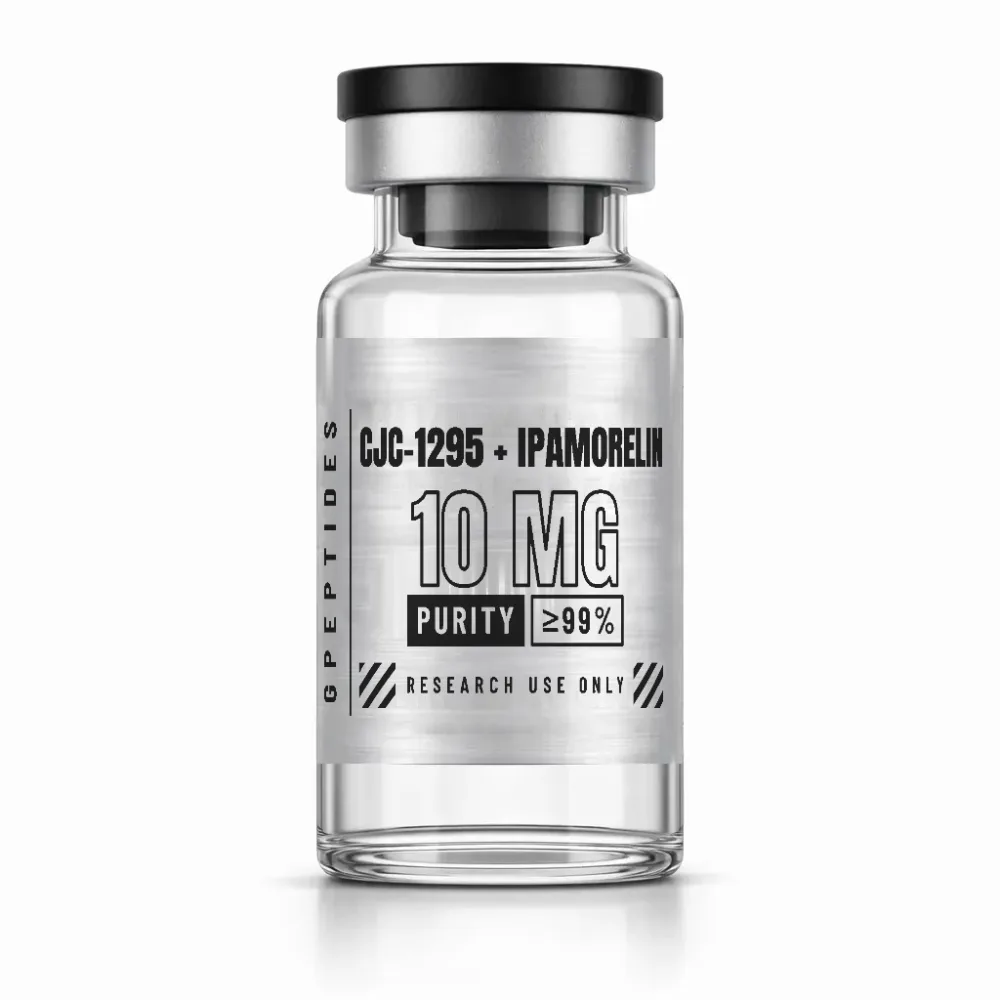
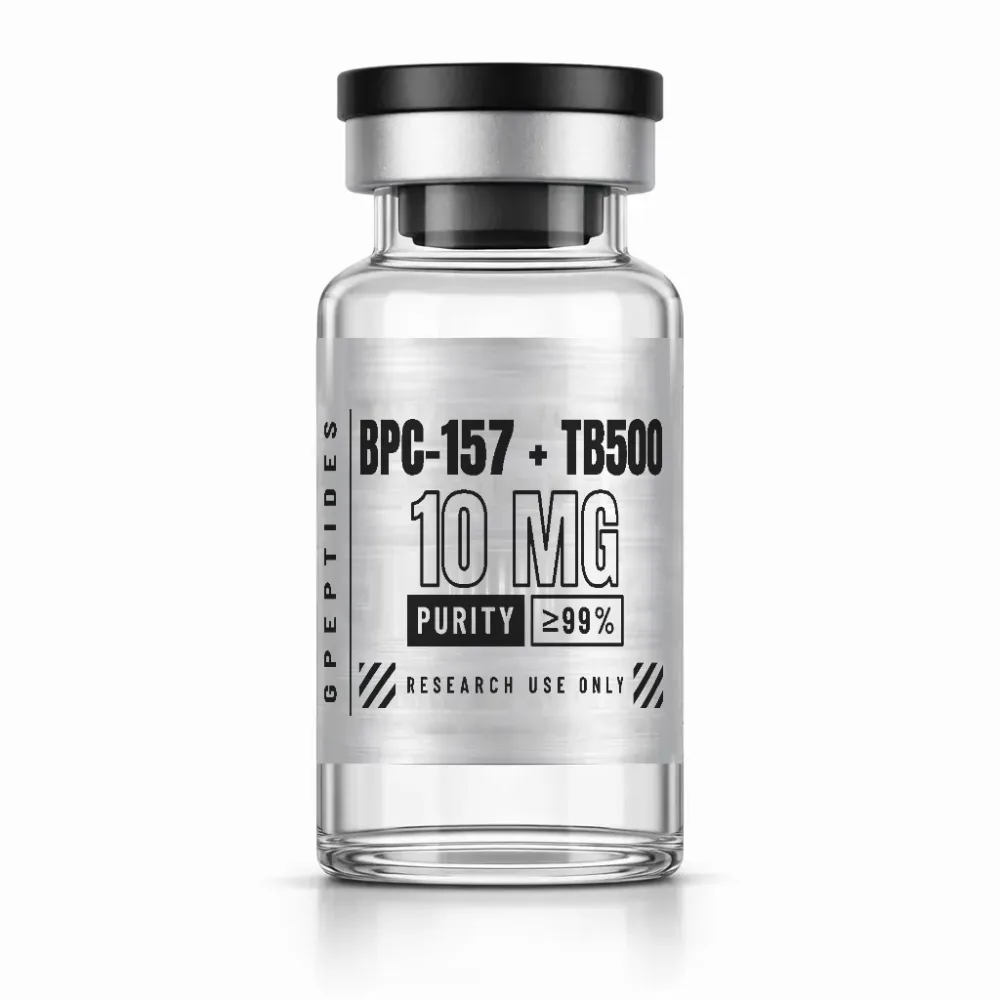
BPC-157 combined with TB-500, a duo frequently paired in research to study tissue and regeneration pathways.
incl. VAT, plus shipping
BPC-157 + TB500 is supplied as a lyophilised powder in a sealed vial. The product is intended exclusively for laboratory and research purposes and not for use in humans or animals.
The available test documents are kept in the lab section, so product and test report stay linked and traceable.
Guide · BPC-157: structure, analytics and handling in research →
The product combines two short synthetic peptides in one shared vial: BPC-157 and TB-500. Both are assigned in the catalogue to the peptide fragments, that is chemically reproduced partial sequences of larger natural proteins. It is supplied as a lyophilisate with a total fill weight of 10 mg, which refers to both components together. Since the peptides are filled together, the product is a blend; it is also found written as “BPC-157 / TB-500”.
Structurally, the two partners have little in common. BPC-157 is unmodified at both ends and contains four prolines; the TB-500 heptapeptide carries an acetyl group at the N-terminus and, at seven residues, is not even half as long.
In the trade, the designation TB-500 is not used consistently. Besides the acetylated heptapeptide, some suppliers offer complete thymosin β4 under the same name, an N-terminally acetylated protein of around 4963 g/mol. With a mass ratio of more than five to one, the two substances are easy to tell apart analytically. Thymosin β4 itself is described in the literature as the main G-actin-sequestering protein; the sequence LKKTETQ lies within its actin-binding region.
BPC-157 and TB-500 do not share a receptor; for BPC-157, no defined receptor has been described at all so far. In research catalogues the two nevertheless often appear side by side, because as short fragments of larger proteins they belong to the same substance group. In the literature BPC-157 is studied predominantly in preclinical tissue models in rodents, while thymosin β4 and its actin-binding fragment are studied in basic research on actin sequestration and cell migration. Both peptides are also available as single vials of 5 mg each: BPC-157 and TB-500. Further fragments such as the tripeptide KPV are listed in the Peptide Fragments category.
Two main signals are expected in the chromatogram of the blend, one for each peptide. Mass spectrometry is decisive for identity: it has to detect BPC-157 at around 1419 Da and assign the TB-500 component unambiguously, either as the heptapeptide at around 889 Da or as complete thymosin β4 at around 4963 Da. Only this mass comparison establishes which of the two TB-500 forms is present in the vial. An independent external laboratory tests the product regularly using HPLC and mass spectrometry. Certificates of analysis that have already been published can be viewed in the lab area; for products without a published document, “pending” is noted there.
The relevant product data is part of the page content: form, purity, test method and intended use.
| Form | Lyophilized powder |
|---|---|
| Purity | ≥98% |
| Test methods | HPLC / MS |
| Unit | 10 mg |
| Category | Sets & Bundles |
| SKU | GP-0006 |
Research Use Only. All products are intended exclusively for scientific in-vitro research and not for human or animal use.
| Use | Research only (in-vitro) |
|---|---|
| Storage | Dry & cool · −20 °C long-term |
Quality assurance
Identity and purity are regularly tested externally by HPLC and mass spectrometry. The available certificates of analysis are filed in the lab section.
View all lab certificates →Current report
The certificate for this product will be published in the lab section as soon as it is available.
View all lab certificates →Both are short synthetic fragments of larger proteins and therefore belong to the same substance group. In origin and structure, however, they are not related to each other.
No defined receptor has been described for BPC-157 so far. It is therefore classified by the origin of its sequence rather than by a target molecule.
The 10 mg refers to the total fill weight of the vial, that is BPC-157 and TB-500 together. As single vials, both peptides are available at 5 mg each.
By the measured molecular mass: the acetylated heptapeptide is at around 889 Da, complete thymosin β4 at around 4963 Da. The difference is so large that the two forms cannot be confused in the mass spectrum.
Exclusively for scientific in-vitro research and laboratory use. Not for human or animal use, not for diagnostic or therapeutic purposes.
As a lyophilized (freeze-dried) powder in a sealed vial. For reconstitution in a research context, bacteriostatic water is typically used.
Unopened and lyophilized: cool, dry and protected from light; for long-term storage at −20 °C. Reconstituted: refrigerated and used promptly.
Published certificates of analysis are listed by product in the Lab section. If no report is available for a product yet, it is marked as “pending” there.
BPC-157 is a synthetic pentadecapeptide without end-group modification whose sequence is traced back to a gastric juice protein described in the literature. This guide explains the naming, structure, distinction from related fragments, analytics and storage of the reagent.
Read more: BPC-157: structure, analytics and handling in research →TB-500 denotes the N-terminally acetylated heptapeptide Ac-LKKTETQ from thymosin β4. This guide explains the naming, the structure and the distinction from related molecules, as well as the analytics and storage of the laboratory reagent.
Read more: TB-500: structure, analytics and handling in research →Semax and Selank are linear heptapeptides with the same Pro-Gly-Pro ending, but they differ in origin and charge character. This guide explains their structure, how they differ from related molecules, expected masses, typical by-products and the storage of the lyophilisates.
Read more: Semax and Selank: structure, analytics and handling in research →