Bestseller
≥98%B
Thymosin β4≥98% Purity
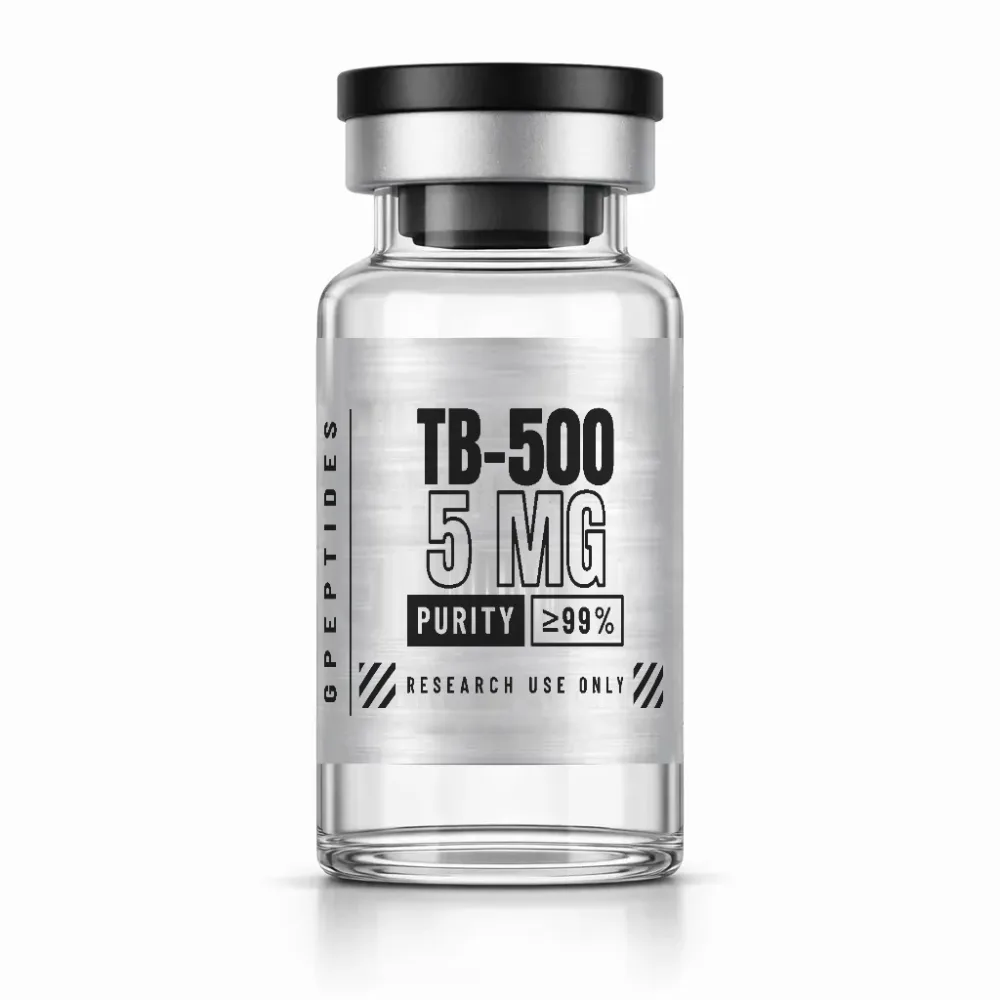
TB-500 is a synthetic fragment of thymosin β4 studied in research on cell migration and tissue regeneration.
incl. VAT, plus shipping
TB-500 is supplied as a lyophilised powder in a sealed vial. The product is intended exclusively for laboratory and research purposes and not for use in humans or animals.
The available test documents are kept in the lab section, so product and test report stay linked and traceable.
Guide · TB-500: structure, analytics and handling in research →
TB-500 is the usual name for a short synthetic fragment of thymosin β4. Thymosin β4 itself is a protein of 43 amino acids that binds monomeric actin (G-actin) in cells and thereby keeps it from being incorporated into actin filaments. The analytical literature and substance databases define TB-500 as an N-terminally acetylated heptapeptide with the sequence Ac-LKKTETQ. It corresponds to positions 17 to 23 of the mature human protein. Common spellings are TB500 and TB 500; a more systematic name is N-acetyl-thymosin β4 (17–23).
With two lysines, two threonines, one glutamate and one glutamine, the sequence is predominantly polar; the N-terminal leucine is the only residue with a non-polar side chain. The acetyl group at the start of the chain is part of the definition of the fragment and distinguishes it from the unmodified sequence LKKTETQ.
The fragment should not be equated with full-length thymosin β4: it contains seven of the 43 amino acids, roughly one sixth of the chain. The tetrapeptide Ac-SDKP, which covers positions 1 to 4 and does not overlap with the TB-500 section, also derives from the same protein. Within the range, TB-500 belongs to the Peptide Fragments category. There it sits alongside BPC-157, an unmodified pentadecapeptide of different origin. For work with both molecules there is also the BPC-157 + TB500 set.
The literature describes the sequence LKKTETQ as the actin-binding region of thymosin β4 and associates it with cell migration. The fragment is therefore investigated in in-vitro work on cell migration and the dynamics of the actin cytoskeleton, as well as in preclinical angiogenesis models. There is also an analytical strand of research: LC-MS methods have been described for the acetylated heptapeptide that allow it to be detected in biological samples.
Mass spectrometry is particularly important for TB-500 because the name is not used consistently. In product descriptions on the market, full-length thymosin β4 sometimes appears under this name as well. The two molecules differ in mass by more than a factor of five: around 0.9 kDa for the acetylated heptapeptide, around 5 kDa for the full protein. An MS measurement therefore identifies the contents of a vial unambiguously, while HPLC indicates the proportion of the target compound in the sample as a whole.
TB-500 is regularly tested externally by HPLC and mass spectrometry in an independent laboratory. Published certificates are available in the lab area; where a document is missing, the product is listed there as pending. How both methods work is explained in the guide HPLC and mass spectrometry.
The relevant product data is part of the page content: form, purity, test method and intended use.
| Form | Lyophilized powder |
|---|---|
| Database | PubChem |
| Purity | ≥98% |
| Test methods | HPLC / MS |
| Unit | 5 mg |
| Category | Peptide Fragments |
| SKU | GP-0008 |
Research Use Only. All products are intended exclusively for scientific in-vitro research and not for human or animal use.
| Use | Research only (in-vitro) |
|---|---|
| Storage | Dry & cool · −20 °C long-term |
Quality assurance
Identity and purity are regularly tested externally by HPLC and mass spectrometry. The available certificates of analysis are filed in the lab section.
View all lab certificates →Current report
The certificate for this product will be published in the lab section as soon as it is available.
View all lab certificates →No. In the scientific literature, TB-500 denotes an acetylated fragment of seven amino acids, whereas thymosin β4 consists of 43 amino acids. The fragment corresponds to positions 17 to 23 of the protein.
“Ac” stands for an acetyl group at the N-terminus. It is part of the literature definition of TB-500 and distinguishes the fragment from the unmodified sequence LKKTETQ.
The same compound is not always offered under the name TB-500. The molecular mass clearly separates the heptapeptide, at around 0.9 kDa, from full-length thymosin β4 at around 5 kDa.
The literature describes it as the actin-binding region of the protein. Thymosin β4 binds monomeric actin (G-actin) and is therefore a subject of cytoskeleton research.
Exclusively for scientific in-vitro research and laboratory use. Not for human or animal use, not for diagnostic or therapeutic purposes.
As a lyophilized (freeze-dried) powder in a sealed vial. For reconstitution in a research context, bacteriostatic water is typically used.
Unopened and lyophilized: cool, dry and protected from light; for long-term storage at −20 °C. Reconstituted: refrigerated and used promptly.
Published certificates of analysis are listed by product in the Lab section. If no report is available for a product yet, it is marked as “pending” there.
TB-500 denotes the N-terminally acetylated heptapeptide Ac-LKKTETQ from thymosin β4. This guide explains the naming, the structure and the distinction from related molecules, as well as the analytics and storage of the laboratory reagent.
Read more: TB-500: structure, analytics and handling in research →MOTS-c is an unmodified, linear peptide of 16 amino acids whose sequence is encoded in the mitochondrial genome. This guide explains its structure, how it differs from related molecules, how to check certificates of analysis, and the storage and handling of the lyophilisate.
Read more: MOTS-c: structure, analytics and handling in research →Cagrilintide is a lipidated analogue of human amylin comprising 37 amino acids, with six substitutions, a disulfide bridge and a C20 fatty diacid bound via γ-glutamic acid. This guide explains its naming, its structure and how it differs from amylin, pramlintide and calcitonin, as well as the analytics and storage of the laboratory reagent.
Read more: Cagrilintide: structure, analytics and handling in research →