- Home
- Shop
- Peptide Fragments
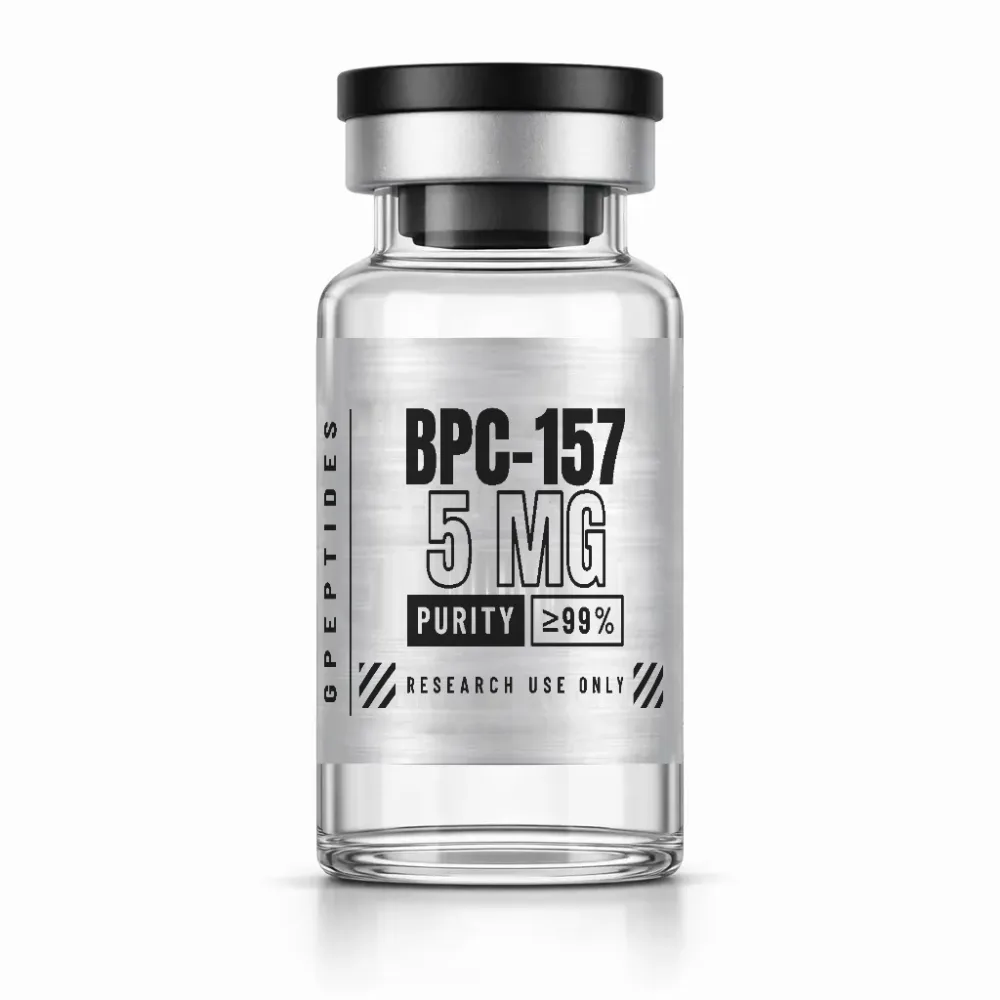
- BPC-157 5 mg
Pentadecapeptide≥98% Purity
BPC-157 5 mg
BPC-157 is a pentadecapeptide derived from a protein found in gastric juice and is intensively researched on tissue-repair and angiogenesis pathways.
FormLyophilized powder
AnalyticsHPLC / MS
COALab area
€32.90
incl. VAT, plus shipping
5 mg
Product information
BPC-157 is supplied as a lyophilised powder in a sealed vial. The product is intended exclusively for laboratory and research purposes and not for use in humans or animals.
The available test documents are kept in the lab section, so product and test report stay linked and traceable.
Quick profile
- Pentadecapeptide (15 amino acids)
- Research on angiogenesis & tissue regeneration
- High stability in lyophilized form
Guide · BPC-157: structure, analytics and handling in research →
About BPC-157
What is BPC-157?
BPC-157 is a fully synthetic, linear peptide of 15 amino acids, i.e. a pentadecapeptide. The abbreviation stands for “Body Protection Compound 157”. In databases and journal articles the substance also appears as BPC 157 or as “Gastric Pentadecapeptide BPC 157”. The literature describes its sequence as a partial sequence of a protein that is said to have been isolated from human gastric juice and is referred to as Body Protection Compound. However, no sequence has been deposited publicly for this parent protein, so the stated origin rests solely on its description in the scientific literature. PubChem lists the peptide with, among others, the synonym “Gastric Juice Peptide Fragment”.
Structure and key data
- Sequence: H-Gly-Glu-Pro-Pro-Pro-Gly-Lys-Pro-Ala-Asp-Asp-Ala-Gly-Leu-Val-OH (one-letter code GEPPPGKPADDAGLV)
- Structure: 15 amino acids, linear, free N- and C-terminus
- Molecular formula: C62H98N16O22
- Molar mass: 1419.5 g/mol (average); monoisotopic mass 1418.70 Da
- CAS number: 137525-51-0
- PubChem CID: 9941957
The formula and masses apply to the free peptide without counter-ions. Structurally, the high proline content stands out: four of the 15 positions are occupied by proline, three of them in direct succession at positions 3 to 5. The three acidic residues, one glutamate and two aspartates, are offset by only one basic side chain, that of lysine.
Classification: BPC-157 and related peptides
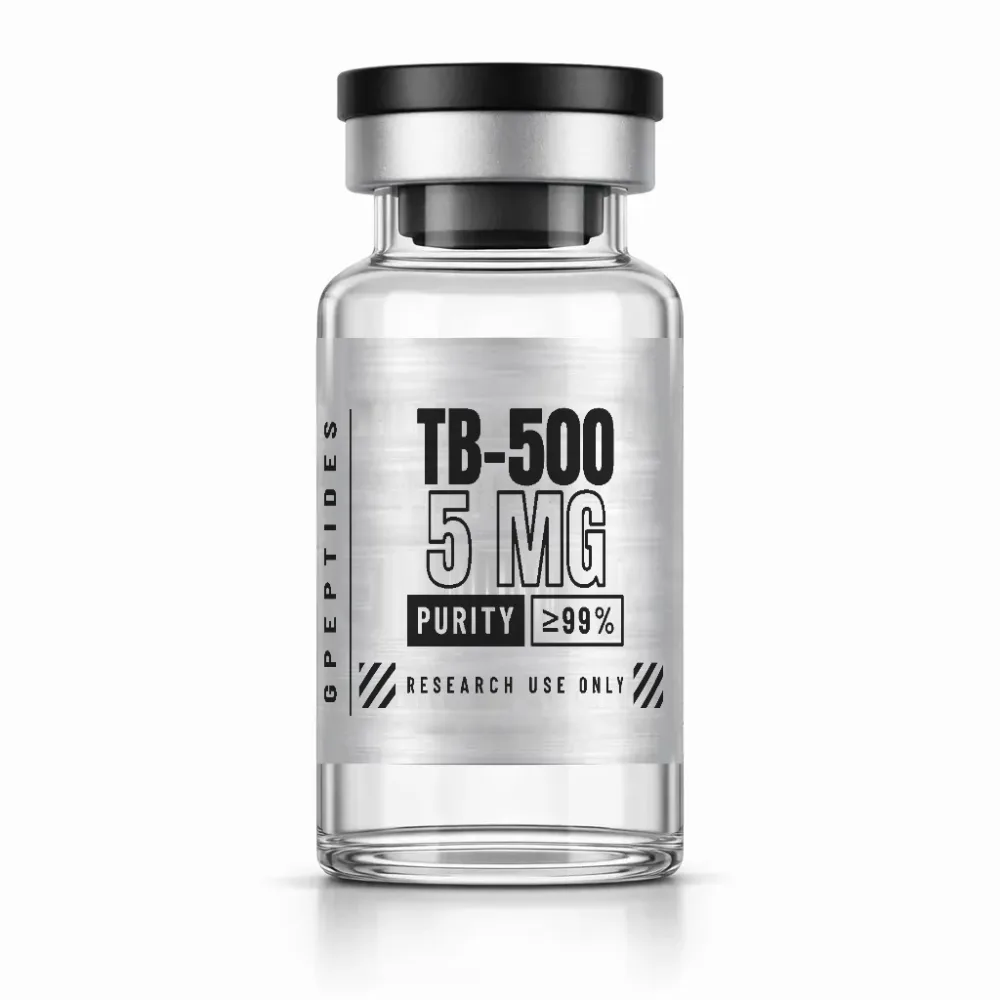
In research catalogues BPC-157 is often mentioned in the same breath as TB-500, although the two molecules have little in common. BPC-157 comprises 15 unmodified amino acids and is attributed to a gastric juice protein. TB-500 is an N-terminally acetylated heptapeptide that represents a section of thymosin β4. Both fragments are also available together in the BPC-157 + TB500 set. The third single peptide in the Peptide Fragments category is KPV, a tripeptide from the C-terminal end of the α-MSH sequence.
Research context
No defined receptor or other molecular target protein has yet been identified for BPC-157, and the scientific literature regards the mechanism as unresolved. The peptide is studied predominantly in connection with the signalling pathways of angiogenesis and cell migration. In vitro, the focus is on assays with tendon fibroblasts that record the outgrowth, survival and migration of the cells. Preclinically, BPC-157 is examined in rodent models that concentrate on tendon, ligament, muscle and gastrointestinal tissue.
Analytics at GPeptides
For BPC-157, HPLC provides the purity value: the area of the main peak is expressed relative to the total area of all signals. Mass spectrometry establishes whether this main peak really is BPC-157. A signal matching the monoisotopic mass of 1418.70 Da is expected; with electrospray ionisation the peptide typically appears as a singly protonated ion at about m/z 1419.7 or, doubly protonated, at about m/z 710.4.
Like the rest of the range, BPC-157 is regularly tested externally by HPLC and mass spectrometry in an independent laboratory. Available certificates of analysis can be found in the lab area; if no certificate has been filed there yet, the status is “pending”. What lies behind percentage figures and secondary peaks is explained in the guide Purity of research peptides.
Specifications
The relevant product data is part of the page content: form, purity, test method and intended use.
| Form | Lyophilized powder |
|---|---|
| Database | PubChem |
| Purity | ≥98% |
| Test methods | HPLC / MS |
| Unit | 5 mg |
| Category | Peptide Fragments |
| SKU | GP-0007 |
Use
Research Use Only. All products are intended exclusively for scientific in-vitro research and not for human or animal use.
| Use | Research only (in-vitro) |
|---|---|
| Storage | Dry & cool · −20 °C long-term |
Lab certificates
Quality assurance
Externally tested, traceably documented.
Identity and purity are regularly tested externally by HPLC and mass spectrometry. The available certificates of analysis are filed in the lab section.
View all lab certificates →Current report
Certificate of Analysis (COA)
The certificate for this product will be published in the lab section as soon as it is available.
View all lab certificates →Frequently asked questions
What does the abbreviation BPC-157 stand for?
BPC stands for “Body Protection Compound”; the number 157 is a fixed part of the established name. Databases also use the spellings BPC 157 and Gastric Pentadecapeptide BPC 157.
Is BPC-157 a naturally occurring peptide?
The peptide itself is produced entirely synthetically. The literature gives its sequence as a partial sequence of a protein described in human gastric juice; however, no public sequence of this parent protein exists.
What are the molecular formula and molar mass of BPC-157?
For the free peptide, PubChem gives the molecular formula C62H98N16O22 and an average molar mass of 1419.5 g/mol. Where a peptide is present as a salt, the counter-ions are added to this value.
How does BPC-157 differ from TB-500?
BPC-157 consists of 15 unmodified amino acids and is attributed to a gastric juice protein. TB-500 is an N-terminally acetylated fragment of seven amino acids that corresponds to a section of thymosin β4.
What is this product for?
Exclusively for scientific in-vitro research and laboratory use. Not for human or animal use, not for diagnostic or therapeutic purposes.
How is the peptide supplied?
As a lyophilized (freeze-dried) powder in a sealed vial. For reconstitution in a research context, bacteriostatic water is typically used.
How do I store it?
Unopened and lyophilized: cool, dry and protected from light; for long-term storage at −20 °C. Reconstituted: refrigerated and used promptly.
Is there a Certificate of Analysis (COA)?
Published certificates of analysis are listed by product in the Lab section. If no report is available for a product yet, it is marked as “pending” there.
Related products
Related guides
BPC-157: structure, analytics and handling in research
BPC-157 is a synthetic pentadecapeptide without end-group modification whose sequence is traced back to a gastric juice protein described in the literature. This guide explains the naming, structure, distinction from related fragments, analytics and storage of the reagent.
Read more: BPC-157: structure, analytics and handling in research →Tesamorelin: structure, analytics and handling in research
Tesamorelin is an N-terminally acylated analogue of human GHRH comprising 44 amino acids. This guide explains its naming, its structure and how it differs from related peptides, as well as the analytics and storage of the laboratory reagent.
Read more: Tesamorelin: structure, analytics and handling in research →MOTS-c: structure, analytics and handling in research
MOTS-c is an unmodified, linear peptide of 16 amino acids whose sequence is encoded in the mitochondrial genome. This guide explains its structure, how it differs from related molecules, how to check certificates of analysis, and the storage and handling of the lyophilisate.
Read more: MOTS-c: structure, analytics and handling in research →