Guides
CJC-1295 and Ipamorelin: structure, analytics and handling in research
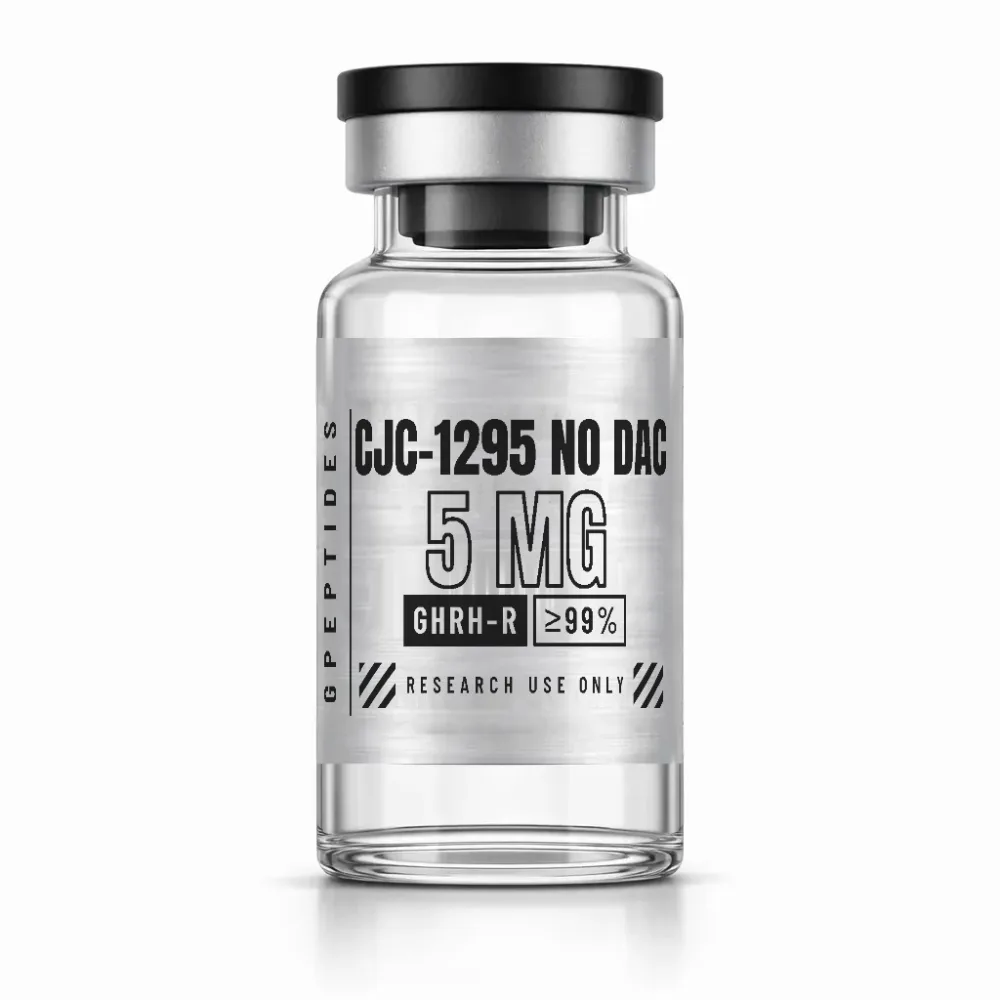
CJC-1295 (No DAC) and Ipamorelin come from two separate peptide families of the GH axis and are listed in the catalogue both individually and as a blend. This guide explains their naming, chemical modifications, expected masses, typical by-products and how to handle the lyophilisate in the laboratory.
Research Use Only- Published2026-09-24
- Updated2026-09-24
- AuthorGPeptides editorial team (operator)
Overview: three catalogue names, two peptides
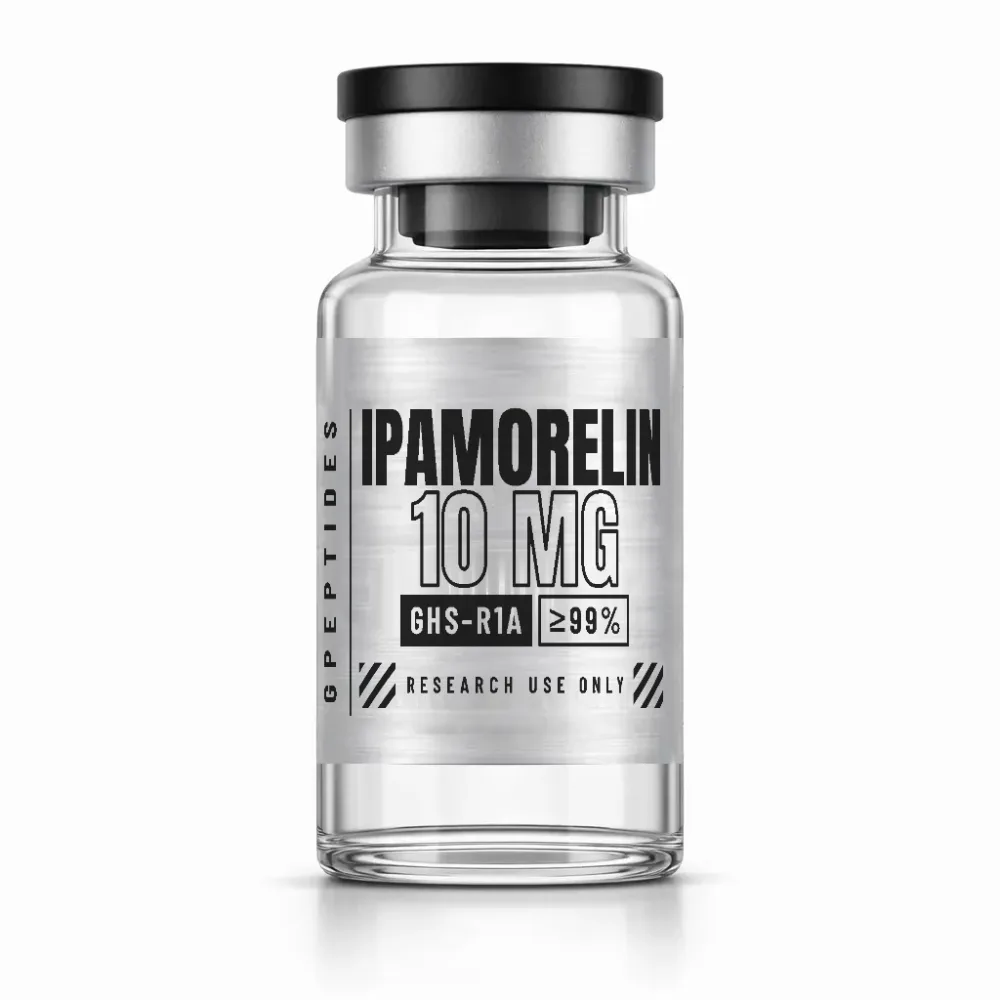
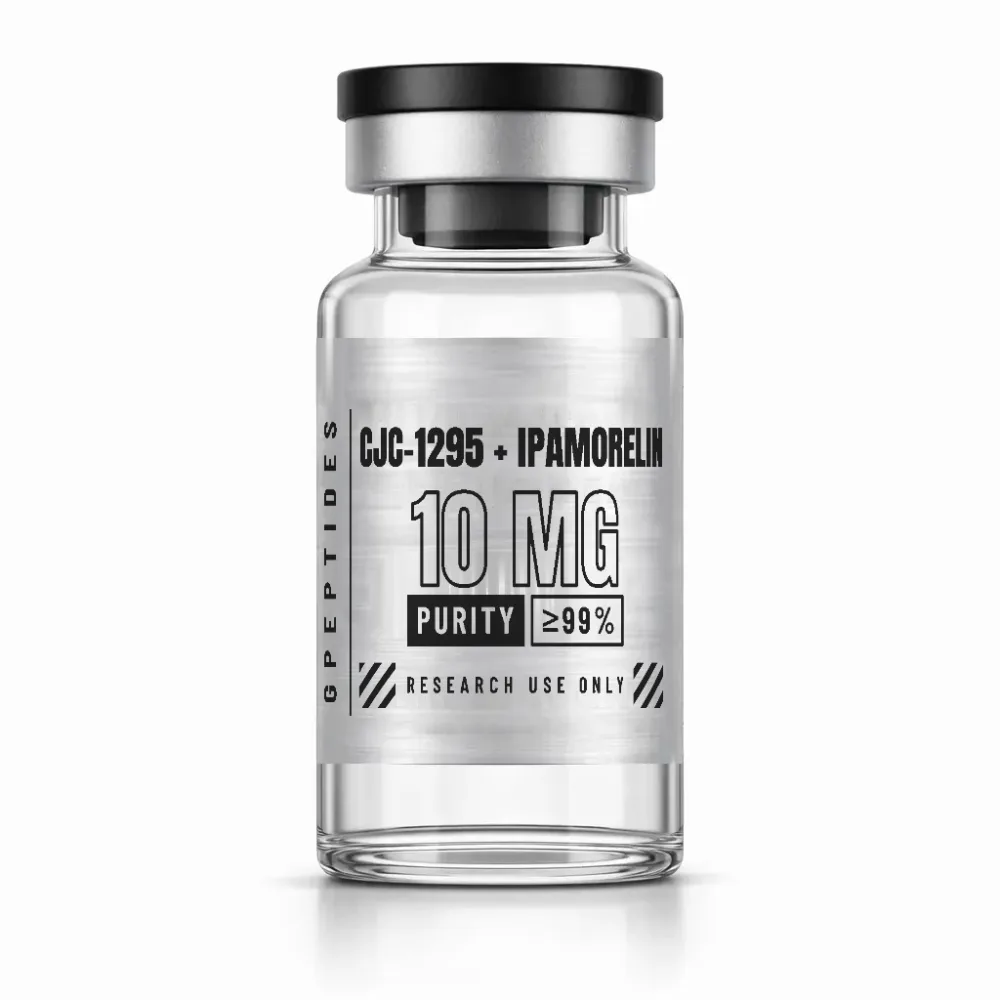
Three catalogue entries, two molecules: CJC-1295 (No DAC) is a modified fragment of growth-hormone-releasing hormone (GHRH), Ipamorelin a short synthetic peptide of the GHRP family, and CJC-1295 + Ipamorelin a lyophilisate that contains both. The names follow different conventions:
- Ipamorelin is an INN (international non-proprietary name). The stem ‘-relin’ assigns peptides to the field of the pituitary releasing hormones; it also appears in Sermorelin, Tesamorelin and Pralmorelin.
- CJC-1295 is not an INN but a research code. Strictly speaking, it belongs to the form with the drug affinity complex (DAC); with the suffix ‘No DAC’ it denotes the peptide without this attachment, systematically Mod GRF(1-29).
- GRF(1-29) refers to the first 29 residues of the hormone (GRF is an older name for GHRH). The unmodified, C-terminally amidated fragment carries the INN Sermorelin.
Structure of CJC-1295 (No DAC) in detail
The four substitutions relative to GRF(1-29) and the chain terminus each have a chemical rationale:
- D-alanine at position 2: In the natural fragment, the bond between residues 2 and 3 is a cleavage site for dipeptidyl peptidases such as DPP-4. The mirror-image configuration hinders this cleavage.
- Glutamine at position 8: The sequence Asn-Ser is considered prone to deamidation; glutamine reacts considerably more slowly by this route.
- Alanine at position 15: Alanine favours helical segments more strongly than the flexible glycine.
- Leucine at position 27: Leucine is similar in size to methionine and just as non-polar, but has no thioether group.
- Argininamide at the C-terminus: The amide group replaces the negatively charged carboxyl group.
As a result of the substitutions, CJC-1295 (No DAC) is, by calculation, only about 10 Da heavier than Sermorelin (C149H246N44O42S, 3357.9 g/mol); in the mass spectrum this is a small but unambiguous difference.
Structure of Ipamorelin
Ipamorelin can be read as a shortened GHRP-1: the dipeptide Ala-Trp is removed from Ala-His-D-2Nal-Ala-Trp-D-Phe-Lys-NH2, and the N-terminal alanine is replaced by Aib.
- Aib carries two methyl groups on the α-carbon. The building block is therefore achiral and cannot epimerise.
- D-Phe-Lys-NH2 at the chain end is the motif shared by the GHRP family; it is also found in GHRP-1, GHRP-2 and GHRP-6.
- Three basic groups – the N-terminal amine, the imidazole ring of histidine and the ε-amino group of lysine – determine how many counter-ions the salt binds.
How they differ from related molecules
- CJC-1295 (No DAC): 29 residues, four substitutions, 3367.9 g/mol, sulfur-free.
- CJC-1295 with DAC: an additional lysine carrying a maleimidopropionyl group, 3647.2 g/mol. The maleimide group reacts with free thiol groups.
- Sermorelin: unmodified GRF(1-29)-NH2 with Asn8, Gly15 and Met27.
- Tesamorelin: full length of 44 residues with a hexenoyl group at the N-terminus, 5135.9 g/mol.
- Ipamorelin: five residues, 711.9 g/mol, no tryptophan.
- GHRP-2 and GHRP-6 (not in the range): hexapeptides with tryptophan as an additional oxidation site.
What to look for in analytics and the COA
All three products are regularly tested externally by HPLC and mass spectrometry; available certificates of analysis (COAs) are published in the lab area, and where there is no certificate, the test is regarded as pending. Reference values for comparison:
- Masses of CJC-1295 (No DAC): monoisotopic 3365.9 Da, average mass 3367.9 Da. The 2 Da difference is not a deviation but a matter of how the value is calculated. Calculated with the average mass, multiply charged ions lie at m/z ≈ 843.0 (4+), 674.6 (5+) and 562.3 (6+); the DAC form would appear at around m/z 912.8 for 4+.
- Masses of Ipamorelin: monoisotopic 711.39 Da, [M+H]+ at m/z 712.39, [M+2H]2+ at m/z 356.70.
- Adducts: sodium (+22 Da, for Ipamorelin [M+Na]+ ≈ 734.4) and potassium (+38 Da) are common accompanying signals, not a foreign substance.
- Typical by-products: deletion sequences from the synthesis, signals at +1 Da (deamidated glutamine, or free acid instead of the C-terminal amide) and at −18 Da (aspartimide at one of the two aspartic acid residues of CJC-1295). Stereoisomers and positional isomers such as L-Ala2 in CJC-1295, D-His or the 1-naphthyl isomer in Ipamorelin have the same mass and show up only chromatographically.
- Blend: The area ratio of the two main peaks is not a ratio of quantities, because the two molecules absorb UV light to different extents. Check whether purity is stated per component or as a sum.
- Counter-ions and net peptide content: Peptides from solid-phase synthesis are usually present as the acetate or trifluoroacetate. For the small Ipamorelin molecule this carries considerable weight: two molecules of acetic acid account, by calculation, for around 14 % of the salt mass, two molecules of trifluoroacetic acid for around 24 %. HPLC purity does not capture this proportion.
The basics are explained in the guide on HPLC and mass spectrometry; the steps for checking the document itself are described in How to read a certificate of analysis.
Storage and handling in the laboratory
Store unopened vials cool at 2–8 °C, and at −20 °C for longer periods, in each case dry and dark. Let the sealed vial reach room temperature before opening, so that no condensation forms on the hygroscopic powder.
- For CJC-1295 (No DAC), deamidation and aspartimide formation are the main concerns; both take place mainly in solution and depend on pH and temperature.
- The aromatic residues of both peptides and the histidine in Ipamorelin can oxidise under the influence of light and oxygen.
- In the blend, both peptides share a single lyophilisate. The more sensitive component is decisive; the two cannot be stored separately.
General notes are given in the guide Storing lyophilised peptides.
Research context
Both molecules are studied in in-vitro and preclinical research on the hypothalamic–pituitary GH axis, although at different receptors. CJC-1295 (No DAC) is assigned to the GHRH receptor, a class B G-protein-coupled receptor whose signal is usually measured in cell assays via cAMP. Ipamorelin is assigned to GHS-R1a, a class A receptor for which intracellular calcium is typically measured.
Research use only: legal notice
CJC-1295 (No DAC), Ipamorelin and the blend are supplied by GPeptides exclusively as laboratory reagents for in-vitro research. They are not intended for use in or on the human or animal body and are not offered as medicinal products; GPeptides provides no information on use or effects. Product pages: CJC-1295 (No DAC), Ipamorelin and CJC-1295 + Ipamorelin; the product family is listed in the GHRH & GHRP Peptides category.
Related categories: GHRH & GHRP
Related products
Related guides
HPLC and mass spectrometry: basics of peptide analytics
Two methods, two questions: HPLC answers “how pure?”, mass spectrometry “is it the right molecule?”. What lies behind peak, retention time and m/z.
Read more: HPLC and mass spectrometry: basics of peptide analytics →How to read a certificate of analysis (COA)
Test method, purity in percent, test date, laboratory: a COA is only as good as the information it contains. How to check whether a certificate matches the vial in your hand.
Read more: How to read a certificate of analysis (COA) →Storing lyophilised peptides: temperature, light, humidity
Dry, cold, dark: lyophilisates are robust but not indestructible. The key rules for unopened vials, opened vials and solutions.
Read more: Storing lyophilised peptides: temperature, light, humidity →