Bestseller
≥98%G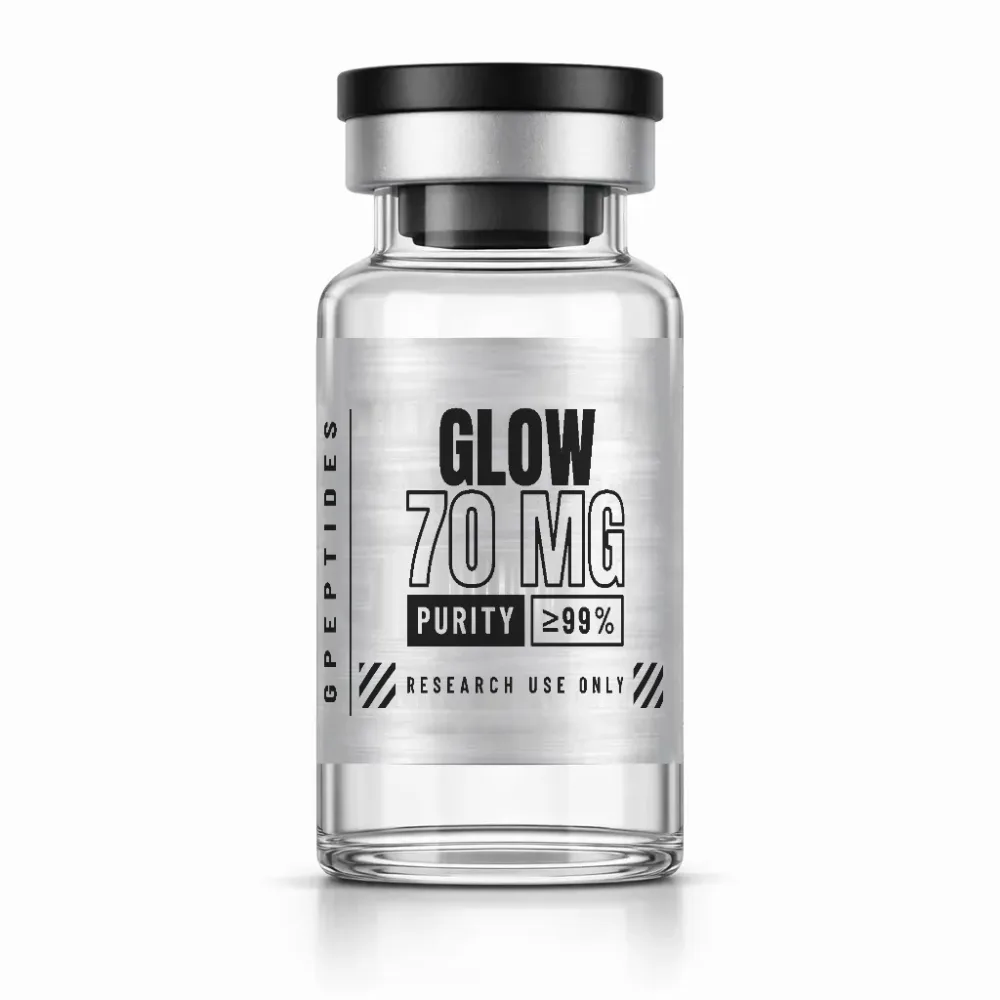
Tripeptide≥98% Purity
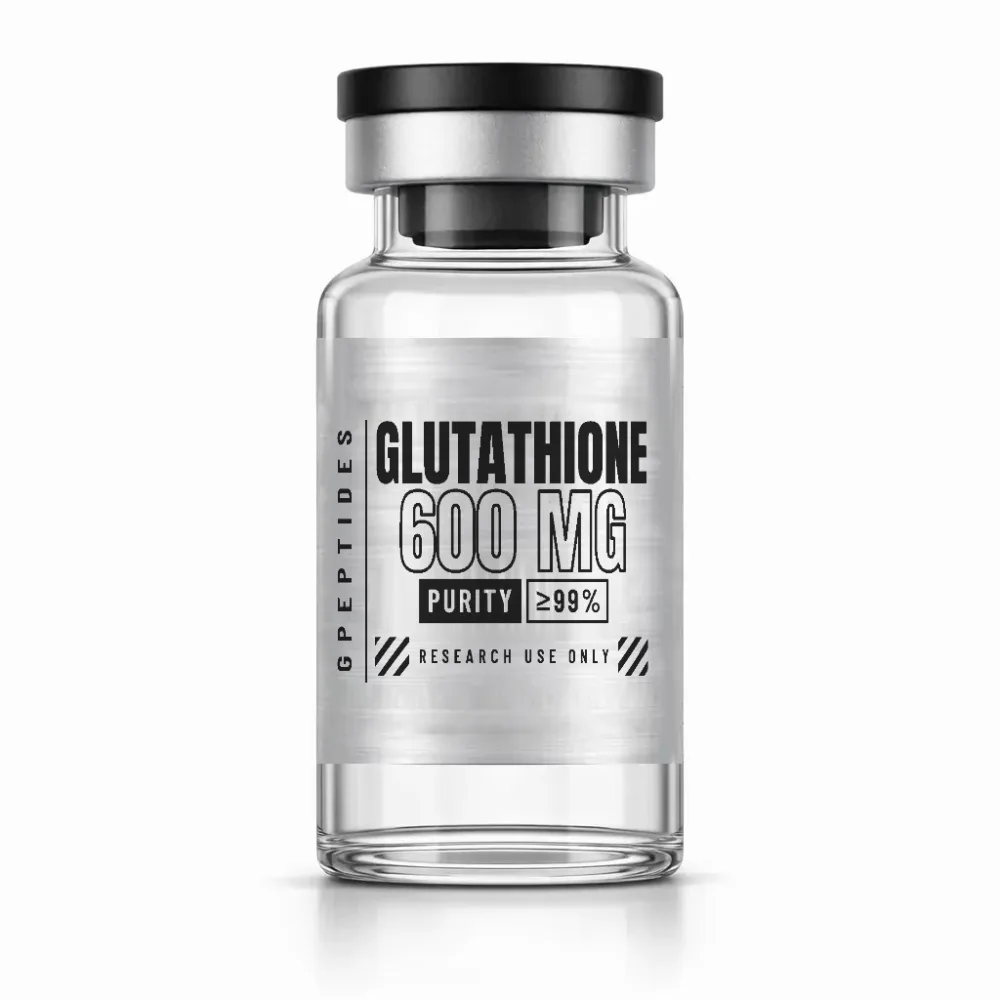
Glutathione is an amino-acid trimer of glutamic acid, cysteine and glycine studied in research on redox and cell-protection pathways.
incl. VAT, plus shipping
Glutathione is supplied as a lyophilised powder in a sealed vial. The product is intended exclusively for laboratory and research purposes and not for use in humans or animals.
The available test documents are kept in the lab section, so product and test report stay linked and traceable.
Glutathione, abbreviated GSH (spelt Glutathion in German), is a tripeptide made up of glutamate, cysteine and glycine. Unlike fragments such as BPC-157 or KPV, it is not a section of a larger protein: cells synthesise it themselves from these three amino acids. As a metabolite, glutathione has been detected in humans as well as, for example, in the bacterium E. coli; it is regarded as the most abundant low-molecular-weight thiol in cells. In databases it also appears as γ-L-glutamyl-L-cysteinylglycine or simply as reduced glutathione.
The following values describe the reduced form with a free thiol group (GSH):
What is unusual about the structure is the bond between glutamate and cysteine. It does not start from the α-carboxyl group, as it would in an ordinary peptide chain, but from the carboxyl group of the side chain in the γ-position. This is why the correct shorthand is γ-Glu-Cys-Gly. The cysteine carries a free thiol group through which two glutathione molecules can join to form a disulfide, GSSG.
Glutathione is the only product in the Redox Peptides category. With KPV and GHK-Cu the shop lists two further tripeptides, although they are built quite differently in chemical terms. KPV is a section of the α-MSH sequence with ordinary α-peptide bonds. GHK-Cu is the copper complex of the tripeptide GHK, in which metal binding is the defining feature. Glutathione, by contrast, is an endogenous metabolite whose chemistry is shaped by its reactive thiol group. The amount per vial differs as well: at 600 mg it is many times the 5 to 10 mg of the peptide fragments.
In cell biology, glutathione is regarded as the most important low-molecular-weight redox buffer. Its chemical role rests on two types of reaction: the reduction of oxidising agents, in which GSH is itself oxidised to GSSG, and conjugation with electrophilic compounds. Both reactions are catalysed by glutathione-dependent enzymes, among them glutathione peroxidases and glutathione S-transferases. Research addresses the redox homeostasis of cells, the biosynthesis and regulation of GSH, and methods for determining glutathione in samples.
Besides purity, the oxidation state is a central analytical question for glutathione, because in solution the thiol group can react with atmospheric oxygen to form the disulfide. Mass spectrometry distinguishes the two forms clearly: singly protonated, reduced GSH gives a signal at about m/z 308.1, whereas the disulfide GSSG, at 612.6 g/mol, is roughly twice as heavy. A suitable HPLC method can separate the two forms, so that any GSSG content shows up as a peak of its own.
Glutathione is regularly tested by an independent external laboratory using HPLC and mass spectrometry. Where a certificate of analysis is available, you will find it in the lab area; without a published certificate, the overview shows the status “pending”. The route from raw material to certificate is described in the guide to quality control.
The relevant product data is part of the page content: form, purity, test method and intended use.
| Form | Lyophilized powder |
|---|---|
| Database | PubChem |
| Purity | ≥98% |
| Test methods | HPLC / MS |
| Unit | 600 mg |
| Category | Redox Peptides |
| SKU | GP-0017 |
Research Use Only. All products are intended exclusively for scientific in-vitro research and not for human or animal use.
| Use | Research only (in-vitro) |
|---|---|
| Storage | Dry & cool · −20 °C long-term |
Quality assurance
Identity and purity are regularly tested externally by HPLC and mass spectrometry. The available certificates of analysis are filed in the lab section.
View all lab certificates →Current report
The certificate for this product will be published in the lab section as soon as it is available.
View all lab certificates →Yes. Glutathione is the English spelling and Glutathion the German one; both refer to the tripeptide γ-Glu-Cys-Gly. The abbreviation GSH denotes the reduced form.
GSH is the reduced form with a free thiol group. GSSG is formed when two GSH molecules are linked by a disulfide bridge and, at 612.6 g/mol, has about twice the molar mass.
The γ indicates that glutamate is bound to cysteine through the carboxyl group of its side chain. In ordinary peptides the linkage runs through the α-carboxyl group, so the γ-bond is a characteristic feature of glutathione.
No. Glutathione is assembled in cells from glutamate, cysteine and glycine and is a metabolite in its own right, not part of a protein sequence.
Exclusively for scientific in-vitro research and laboratory use. Not for human or animal use, not for diagnostic or therapeutic purposes.
As a lyophilized (freeze-dried) powder in a sealed vial. For reconstitution in a research context, bacteriostatic water is typically used.
Unopened and lyophilized: cool, dry and protected from light; for long-term storage at −20 °C. Reconstituted: refrigerated and used promptly.
Published certificates of analysis are listed by product in the Lab section. If no report is available for a product yet, it is marked as “pending” there.
BPC-157 is a synthetic pentadecapeptide without end-group modification whose sequence is traced back to a gastric juice protein described in the literature. This guide explains the naming, structure, distinction from related fragments, analytics and storage of the reagent.
Read more: BPC-157: structure, analytics and handling in research →TB-500 denotes the N-terminally acetylated heptapeptide Ac-LKKTETQ from thymosin β4. This guide explains the naming, the structure and the distinction from related molecules, as well as the analytics and storage of the laboratory reagent.
Read more: TB-500: structure, analytics and handling in research →MT1 and MT2 are two structurally distinct analogues of α-MSH: a linear chain of 13 residues and a heptapeptide closed by a lactam bridge. This guide explains the naming, structure, expected masses, typical by-products and storage of the lyophilisates.
Read more: Melanotan I and II: structure, analytics and handling in research →